Shadow and Subterfuge Series
Were Boys Playing Baseball at Pearl Harbor? A WWII Myth
“The Boys of Summer on the Morning of Infamy”
by Gary Kidney
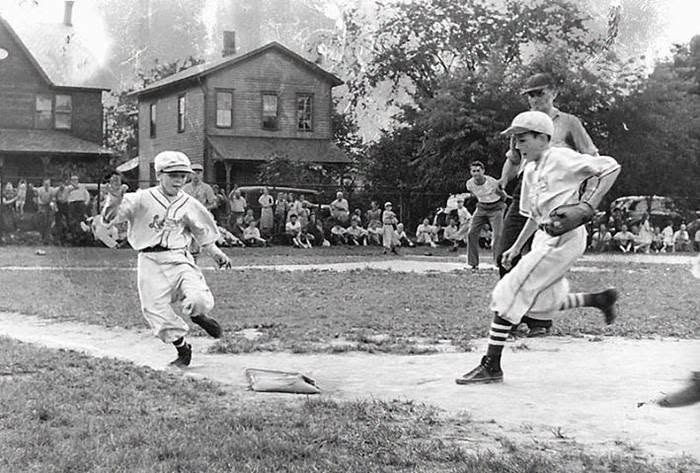
In Hawaii, baseball was not just a pastime, it was the favorite sport. Alexander Cartwright, known as the “founder of baseball” and a member of the Baseball Hall of Fame,
settled in Honolulu in 1849 and organized the first teams. Plantation workers picked up bats and gloves to escape the tedium of work and for the pure enjoyment of the game. It took hold there faster than on the U.S. mainland.
By 1941, Oahu supported a dense ecosystem of leagues, drawing a mixture of natives and Japanese transplants into countless informal sandlot-style games. As US servicemen and their families streamed onto the islands, a bat and a ball were simply what you did with a free morning. On that last peacetime Sunday of 1941, the day was clear and warm — perfect for a game. I had been told repeatedly, in classrooms, by relatives, and in the 2001 film Pearl Harbor, the story was true. An article about the film claimed that the scene was drawn from survivor interviews. But, were any boys actually playing at 7:55 AM, when the attack happened?
I was dubious. I grew up post-war and was a sportsman, playing many sports on school teams, at the Y, and in the neighboring parks and fields. Not once was I in a game at 8:00 AM on a Sunday. I was a paperboy and the Sunday route was always the heaviest and longest. An 8:00 AM attack on my hometown would have found me pedaling my bike furiously down Madison Street. And if I finished early, there was a bath and church to attend. And, if I happened to get a Sunday free, no way would I be out of bed at eight. Was I so different from those boys in Hawaii?
So, I dug into some research. In the islands, December was still football season, just as in the mainland. Bowl games had everyone’s attention. That December 6, Honolulu Stadium hosted the annual Shrine Bowl football classic with a stadium record 24,000 fans. Those visiting college football, not baseball, players spent the day doing what they could to help by volunteering as aides at Tripler Army Hospital.
The Honolulu Interscholastic League and the Honolulu and AJA baseball leagues that dominated Hawaii’s sporting calendar ran their seasons in spring and summer. Their record confirms the season opened on January 31st. The Honolulu Sector League and Interscholastic League baseball schedule for 1941 had no December games.
Time Magazine, who fact-checked the film, could not verify the account by any single named boy, family diary, or contemporaneous newspaper account. So, the “survivor anecdote” can’t be proven. Most of the stories of boys who witnessed the attack talk about being nearby but doing other things.
For example, Bob Bush, the 14-year-old son of an Army officer at Schofield Barracks, had just finished serving as an altar boy at Sunday Mass when he watched a formation of planes fly low from the direction of Kolekole Pass toward Wheeler Field. His account captures exactly the kind of ordinary Sunday-morning activity — churchgoing, not sport, around Oahu. That day changed instantly. Martial law was declared. Blackout curtains, gas masks, beaches full of barbed wire became daily realities. Baseball didn’t return until 1943.
Still, the iconic image of interrupted sandlot ball has developed into an evocative folklore, if not a true cultural foundation.
My uncle Kenneth was in his early twenties in 1941. When I shared my research with him, he laughed and said, “I can tell you how the story started.” He related the tale. He was playing a pick-up game of football in Maryville, Missouri. One of the mothers came running onto the field shouting, “The Japs are attacking! It’s on the radio!” With a smile, he said, “I bet every boy in the game will tell you they saw Japanese planes on the run home. I’m sure I did.”
My mystery was solved. 8:00 AM Honolulu time is 1:00 PM in Missouri — the perfect time for any boy to be on the field. The image of Japanese planes in attack formation is probably burned into the psyche of anyone old enough to remember the day. Baseball during Oahu’s attack isn’t true, but the perceived reality has remained as a World War II legend.
© 2026 Gary Kidney. All rights reserved. Data submitted via our contact form is never stored unless you explicitly opt-in to our Constant Contact newsletter. This site uses Google Analytics, which sets cookies to count visits. Nothing else tracks you here, and your data is never sold or shared.